Jan/Feb Children's Studies Bookshelf

""

Jan/Feb Children's Studies Bookshelf

Meet the Curator

Naomi Kim

Naomi Kim is a fifth-year PhD candidate in the English department and a Lynne Cooper Harvey Fellow in American Culture Studies. Her dissertation project examines race, religion, and reading practices in Asian American literature. Her work has also been supported by a fellowship through the Center for Race, Ethnicity, and Equity, and she is currently a Graduate Fellow in the Writing Center. A longtime lover of children's literature, Naomi previously completed a Mentored Teaching Experience with Dr. Amy Pawl for the course Girls' Fiction.

Learn more

Immigration and Displacement in Children's Literature

"Scholars and creators of literature for young people can play at least a small role in helping readers to imagine a future that overcomes the follies of the past and present." -- Philip Nel

How do you make a home—and how do you leave one behind? Issues of migration and displacement have grown more and more pressing each year, including for children. Data from Unicef and UNHCR indicate that “the global number of displaced children nearly tripled from around 17.0 million to 48.8 million” between the years 2010 and 2024. Through involuntary and voluntary pathways, children become refugees, immigrants, and members of scattered diasporas. They and their families leave behind communities, cross borders, and take on the challenge of finding new homes. 

“The precarity of displacement amplifies the vulnerabilities inherent to childhood,” writes scholar Philip Nel as he discusses narratives of migration, displacement, and diaspora in children’s literature. In the face of that vulnerability, Nel insists that “[s]tories like these help” by offering affirmation and empathy, “even though they are no substitute for home itself.” Nel’s assertion here builds on Rudine Sims Bishop’s idea that children’s books can offer their readers mirrors, which reflect back to children their own experiences, honoring and validating them. At the same time, Nel’s analysis indicates that children’s literature depicting these issues may also function as windows, which show readers the value of experiences that are not their own. Yet children’s literature offers windows not only to child readers—but to everyone. “When children's literature cultivates an empathetic imagination,” Nel argues, “it can bring people of all ages closer to understanding the displacement felt by migrants, refugees, and those in diasporic communities.” Literature thus builds bridges—and in doing so activates a political imagination that pursues welcome for all. 

The works of children’s literature featured on this bookshelf explore a variety of journeys—historical, contemporary, and fantastical—through a variety of forms. Pam Munoz Ryan’s novel Esperanza Rising takes up a family’s immigration across the US-Mexico border, a move that amplifies questions of class, race, and labor. Shaun Tan’s wordless picture book The Arrival visually depicts a migrant’s story, creating a surreal world both strange and wonderful. Edwidge Danticat’s picture book Mama’s Nightingale, illustrated by Leslie Straub, uses prose in addition to visuals to convey a child grappling with the toll of separation caused by immigration detention. The Night Diary by Veera Hiranandi uses an epistolary structure to tackle the difficult history of conflict and displacement caused by the partition of India and Pakistan in 1947. Jasmine Warga’s Other Words for Home uses poetic verse to tell the story of a girl fleeing Syria and adjusting to life in Ohio. Edited by Ellen Oh, You Are Here: Connecting Flights is an anthology of interconnected stories set at an airport, where different Asian American kids’ lives and experiences of discrimination collide. 

Bringing together these works, this bookshelf displays the formal diversity of stories that share, at their core, a concern for the emotional and relational lives of immigrants and refugees. They ask us to consider how word and image can confront readers with the causes and effects of various forms of displacement and migration. They ask us how prose and poem can comfort readers with visions of community, connection, and solidarity, helping imagine better worlds for all of us.


Books on Shelf:

Pam Munoz Ryan, Esperanza Rising, 2000
Shaun Tan, The Arrival, 2006
Edwidge Danticat, Mama's Nightingale: A Story of Immigration and Separation, 2015
Veera Hiranandani, The Night Diary, 2018
Jasmine Warga, Other Words for Home, 2019
Ellen Oh (editor); multi-authored, You Are Here: Connecting Flights, 2023


Scholarly Sources: 

Bishop, Rudine Sims. "Mirrors, Windows, and Sliding Glass Doors." Perspectives: Choosing and Using Books for the Classroom, vol. 6, no. 3, 1990.

Nel, Philip. "Introduction: Migration, Refugees, and Diaspora in Children's Literature." Children's Literature Association Quarterly, vol. 43 no. 4, 2018, p. 357-362. Project MUSE, https://dx.doi.org/10.1353/chq.2018.0043.
This Month's Featured Books

Esperanza Rising

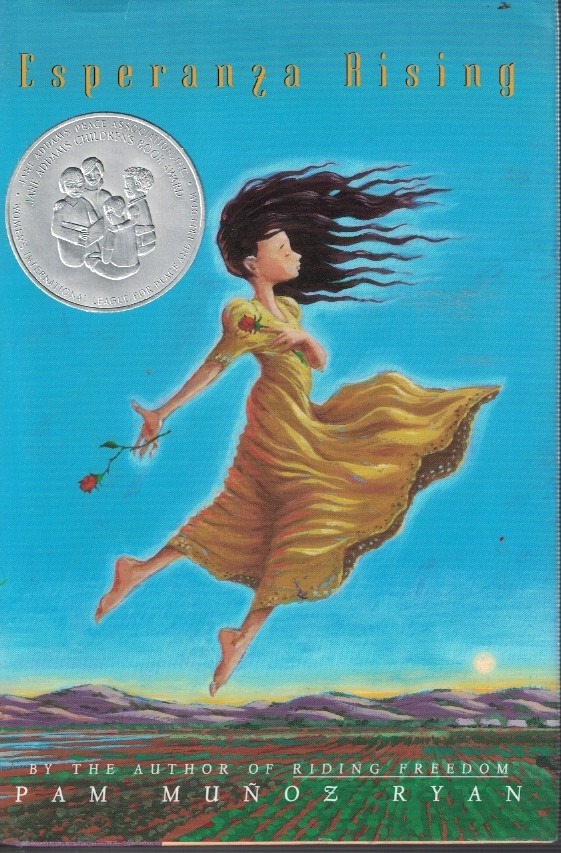
Set in the 1930s, Pam Munoz Ryan’s Newbery-winning novel Esperanza Rising (2000) takes up issues of racism, class, and farm labor against the backdrop of the Dust Bowl and the Great Depression. Esperanza Ortega is the privileged daughter of a wealthy family in Mexico—until her father’s murder changes her family’s fortunes. Forced to flee to the United States, Esperanza, her mother, and their former servants settle in a farm camp to take on agricultural work. Labor tensions simmer, and poor working conditions lead to coughs and fevers. Meanwhile, Esperanza struggles to adjust to her new reality, one in which she now occupies a marginal class and race status, but over time, she builds strong friendships and learns to hold on to hope— the very thing her name means in Spanish.

-NK

You Are Here: Connecting Flights

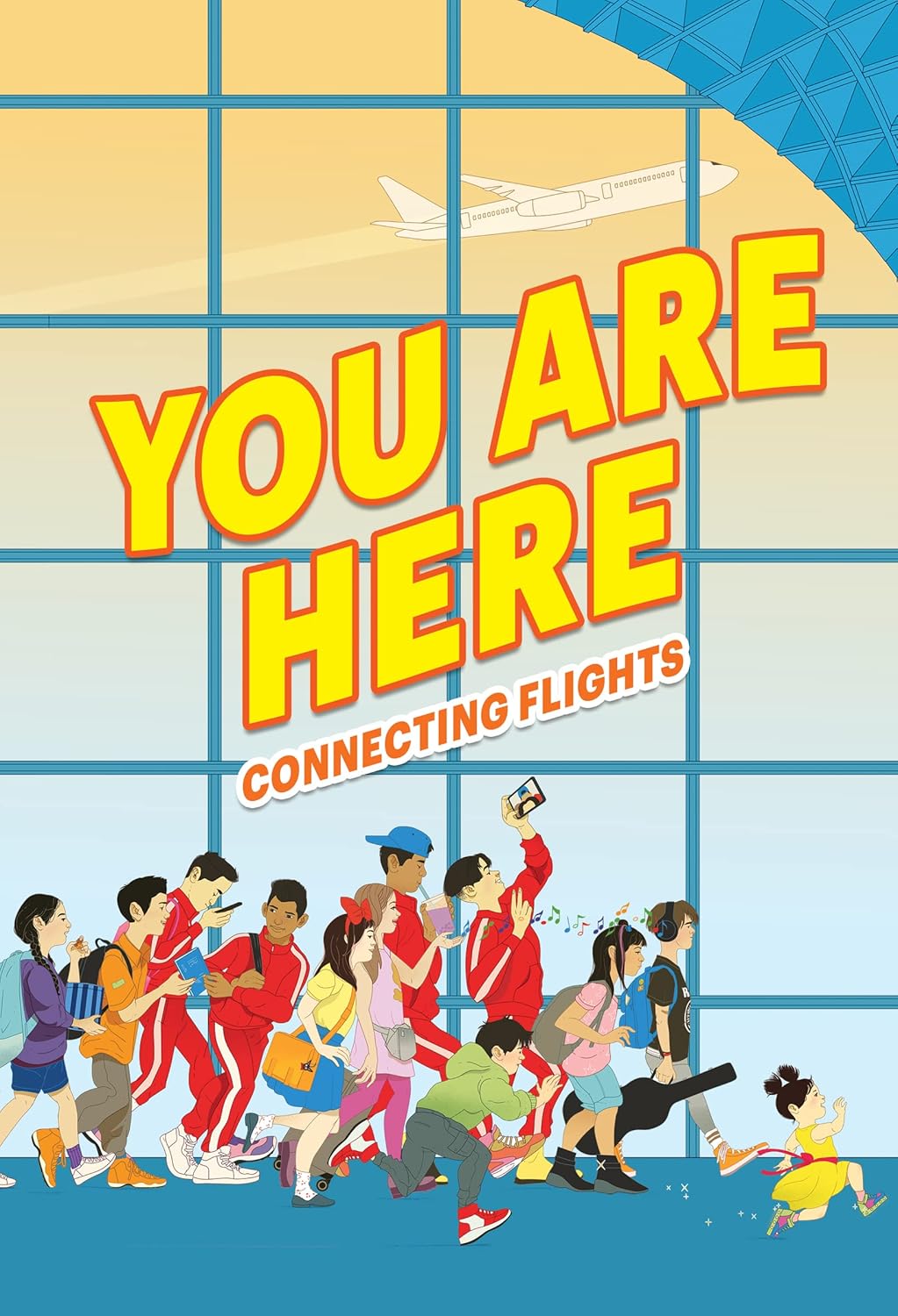
Set in a busy airport, You Are Here: Connecting Flights (2024) brings together twelve interconnected stories of young Asian Americans navigating friendships, belonging, and discriminatory hostility. The choice of an airport setting calls our attention not only to travel but also to immigration, and the interconnected form serves as a reminder that we live in an interconnected world, a social ecosystem. Inclusive of both East and Southeast Asian American characters and writers, the anthology features a star-studded line-up of contributing writers, including Erin Entrada Kelly, Christina Soontornvat, Grace Lin, and Linda Sue Park.

-NK

The Night Diary

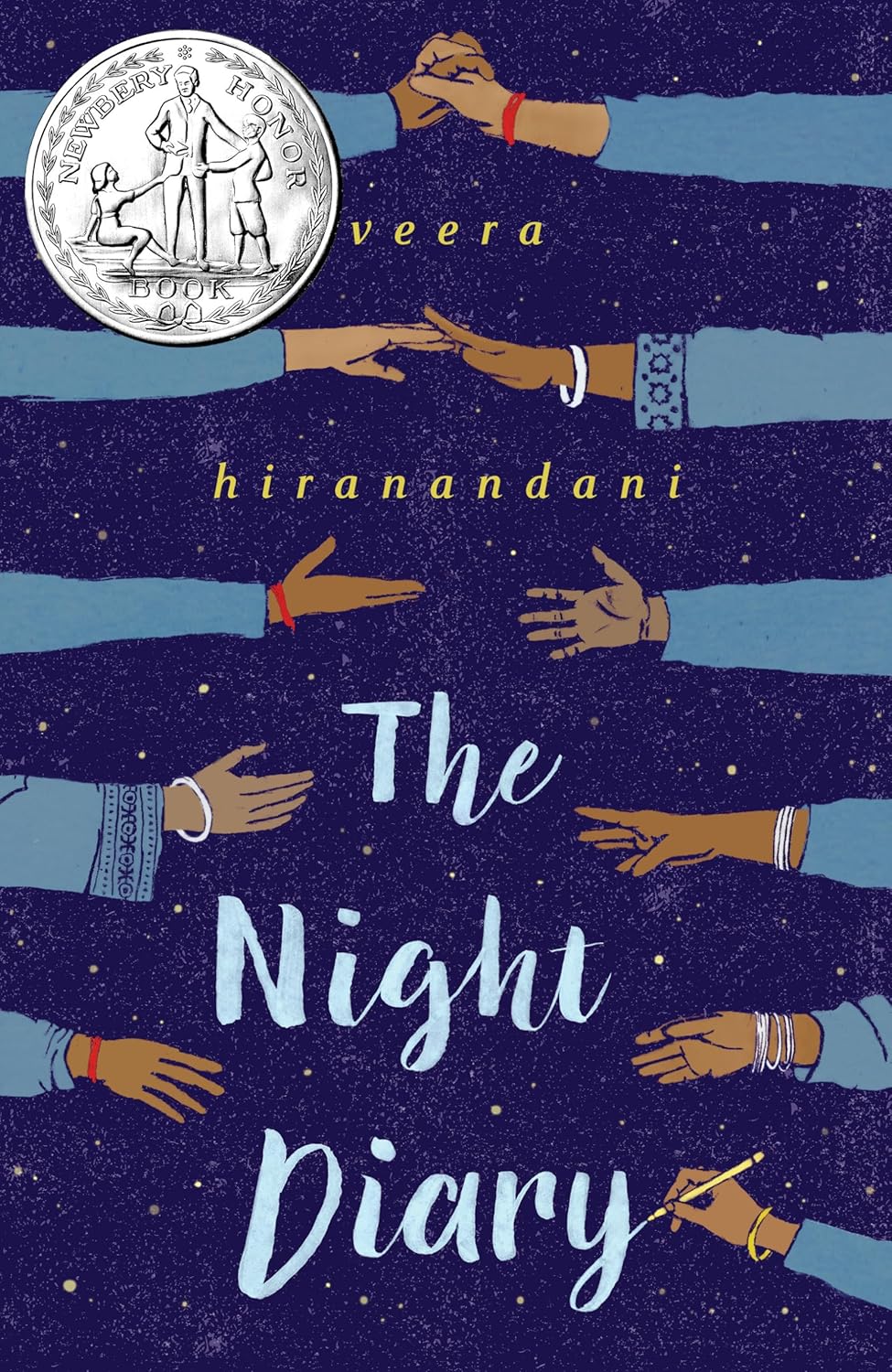
Through twelve-year-old Nisha’s journal entries, Veera Hiranandani’s The Night Diary (2018) takes up the effects of the 1947 partition of colonial British India into two independent countries, India and Pakistan. Nisha comes from a mixed religious background—Muslim and Hindu—and the partition raises pressing questions about belonging, identity, and safety. As Nisha and her family become refugees, fleeing across the new border, she records the journey in her diary, addressing her entries as letters to her deceased mother.

-NK

Other Words for Home

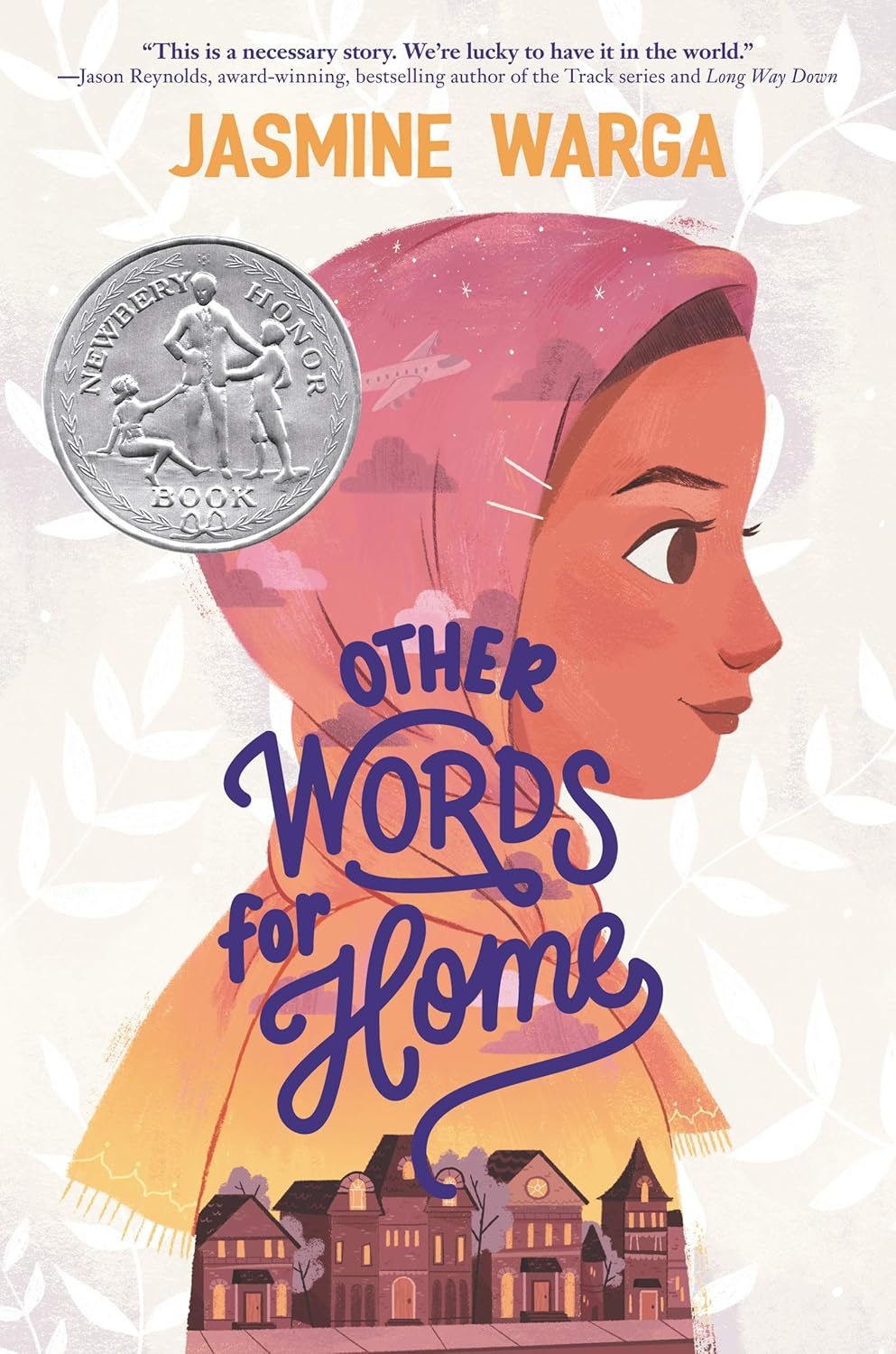
Author Jasmine Warga, whose immigrant father was born in Jordan to Palestinian refugees, has explained that as a child, she faced a lack of representation—until post-9/11 depictions burst onto the media scene with largely pejorative views of Muslims and Arabs. Growing up with both invisibility and Islamophobia influenced Warga’s desire to increase positive Arab American representation through her own writing, including Other Words for Home (2019). Twelve-year-old Jude and her family live in a coastal town in Syria, but as the Syrian Civil War unfolds, she and her mother flee to join her uncle’s family in Cincinnati, Ohio. School, language, friendships, food, and even family life are rendered unfamiliar and challenging with the move. In free verse, Jude spins lyrical lines that convey her struggle to adjust to life in the United States as a Muslim and an Arab.

-NK

Mama's Nightingale: A Story of Immigration and Separation

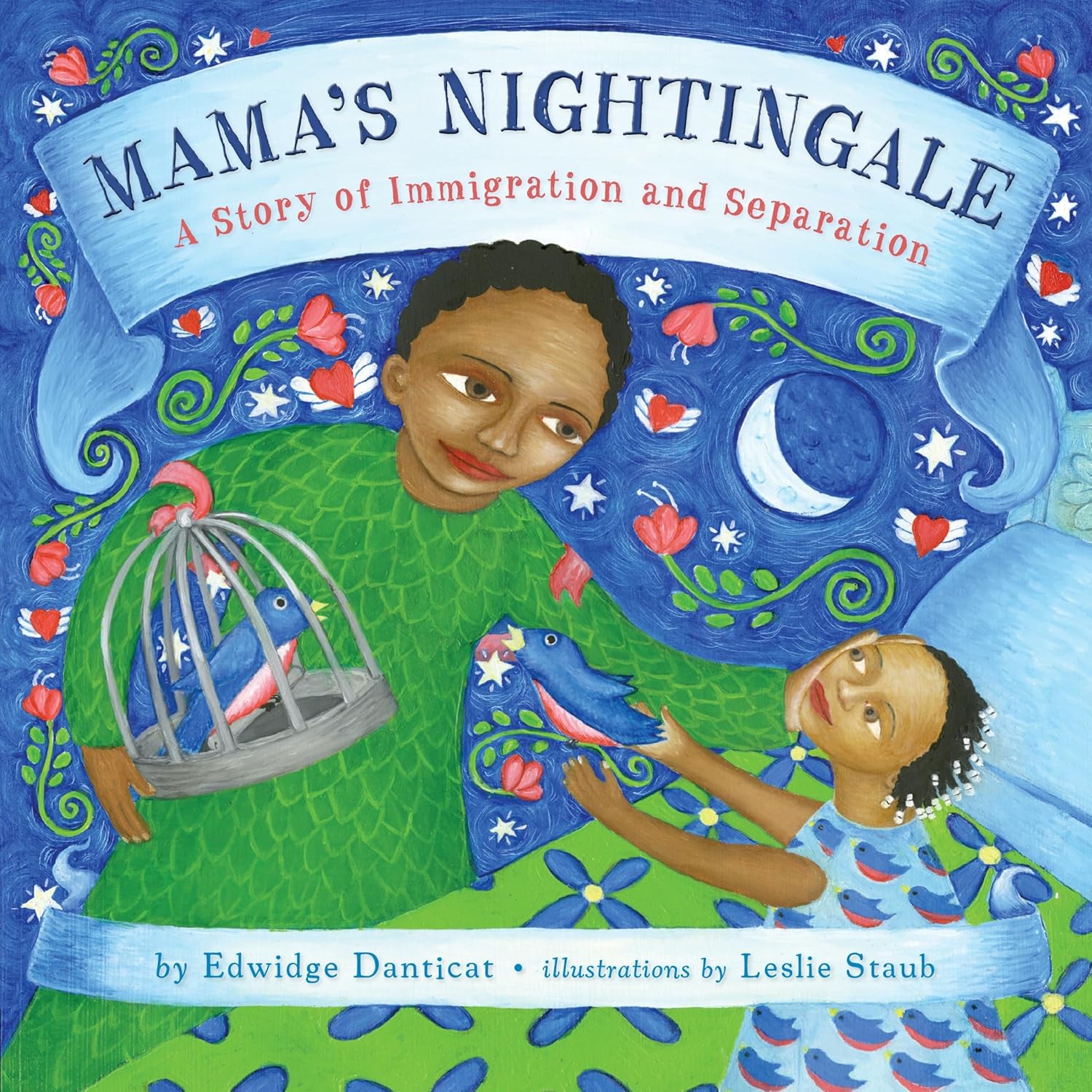
Edwidge Danticat’s picture book Mama’s Nightingale (2015), illustrated by Leslie Staub, features a Haitian family in the U.S. dealing with separation caused by the detention of undocumented immigrants. Saya’s mother has been taken to the “Sunshine Correctional” because of her immigration status. Struggling with the separation, Saya finds comfort in listening to recordings of her mother telling stories and eventually writes her own. Danticat’s writing weaves in Haitian Creole and demonstrates the liberating power of storytelling, while Staub’s illustrations feature birds and birdcages as visual motifs that emphasize freedom and incarceration. Both word and image work together in Mama’s Nightingale as a testament to the difference that art in various forms can make.

-NK

The Arrival

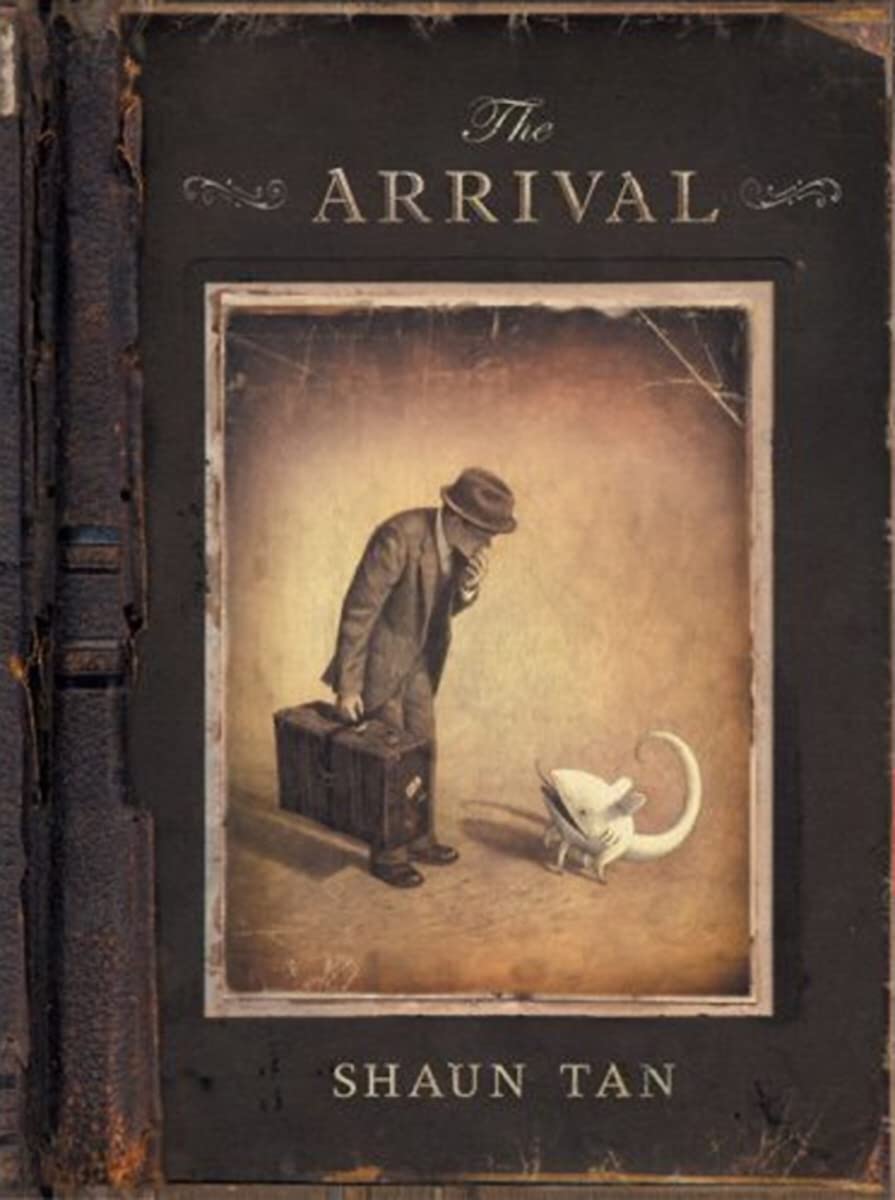
Shaun Tan’s The Arrival (2006) is a treat to read, telling the story of one migrant’s journey solely through surreal illustrations. Our main character leaves behind his home, travels across the ocean, and arrives in a unfamiliar country to make a new home, where his family eventually joins him. By omitting any form of recognizable language or writing, Tan conveys the language barrier that the migrant faces—and puts the reader in his shoes. Both the character and the reader are forced to attend carefully to visual cues to make sense of a disorienting world. Yet despite the fantastical setting of The Arrival, Tan’s illustrations include details reminiscent of “real-world” histories, like Ellis Island, that remind us how his tale is rooted in the real immigrant experiences.

-NK

Esperanza Rising

Set in the 1930s, Pam Munoz Ryan’s Newbery-winning novel Esperanza Rising (2000) takes up issues of racism, class, and farm labor against the backdrop of the Dust Bowl and the Great Depression. Esperanza Ortega is the privileged daughter of a wealthy family in Mexico—until her father’s murder changes her family’s fortunes. Forced to flee to the United States, Esperanza, her mother, and their former servants settle in a farm camp to take on agricultural work. Labor tensions simmer, and poor working conditions lead to coughs and fevers. Meanwhile, Esperanza struggles to adjust to her new reality, one in which she now occupies a marginal class and race status, but over time, she builds strong friendships and learns to hold on to hope— the very thing her name means in Spanish.

-NK

You Are Here: Connecting Flights

Set in a busy airport, You Are Here: Connecting Flights (2024) brings together twelve interconnected stories of young Asian Americans navigating friendships, belonging, and discriminatory hostility. The choice of an airport setting calls our attention not only to travel but also to immigration, and the interconnected form serves as a reminder that we live in an interconnected world, a social ecosystem. Inclusive of both East and Southeast Asian American characters and writers, the anthology features a star-studded line-up of contributing writers, including Erin Entrada Kelly, Christina Soontornvat, Grace Lin, and Linda Sue Park.

-NK

The Night Diary

Through twelve-year-old Nisha’s journal entries, Veera Hiranandani’s The Night Diary (2018) takes up the effects of the 1947 partition of colonial British India into two independent countries, India and Pakistan. Nisha comes from a mixed religious background—Muslim and Hindu—and the partition raises pressing questions about belonging, identity, and safety. As Nisha and her family become refugees, fleeing across the new border, she records the journey in her diary, addressing her entries as letters to her deceased mother.

-NK

Other Words for Home

Author Jasmine Warga, whose immigrant father was born in Jordan to Palestinian refugees, has explained that as a child, she faced a lack of representation—until post-9/11 depictions burst onto the media scene with largely pejorative views of Muslims and Arabs. Growing up with both invisibility and Islamophobia influenced Warga’s desire to increase positive Arab American representation through her own writing, including Other Words for Home (2019). Twelve-year-old Jude and her family live in a coastal town in Syria, but as the Syrian Civil War unfolds, she and her mother flee to join her uncle’s family in Cincinnati, Ohio. School, language, friendships, food, and even family life are rendered unfamiliar and challenging with the move. In free verse, Jude spins lyrical lines that convey her struggle to adjust to life in the United States as a Muslim and an Arab.

-NK

Mama's Nightingale: A Story of Immigration and Separation

Edwidge Danticat’s picture book Mama’s Nightingale (2015), illustrated by Leslie Staub, features a Haitian family in the U.S. dealing with separation caused by the detention of undocumented immigrants. Saya’s mother has been taken to the “Sunshine Correctional” because of her immigration status. Struggling with the separation, Saya finds comfort in listening to recordings of her mother telling stories and eventually writes her own. Danticat’s writing weaves in Haitian Creole and demonstrates the liberating power of storytelling, while Staub’s illustrations feature birds and birdcages as visual motifs that emphasize freedom and incarceration. Both word and image work together in Mama’s Nightingale as a testament to the difference that art in various forms can make.

-NK

The Arrival

Shaun Tan’s The Arrival (2006) is a treat to read, telling the story of one migrant’s journey solely through surreal illustrations. Our main character leaves behind his home, travels across the ocean, and arrives in a unfamiliar country to make a new home, where his family eventually joins him. By omitting any form of recognizable language or writing, Tan conveys the language barrier that the migrant faces—and puts the reader in his shoes. Both the character and the reader are forced to attend carefully to visual cues to make sense of a disorienting world. Yet despite the fantastical setting of The Arrival, Tan’s illustrations include details reminiscent of “real-world” histories, like Ellis Island, that remind us how his tale is rooted in the real immigrant experiences.

-NK