​Danielle Dutton

​Danielle Dutton

​Danielle Dutton

Professor of English
Director, Creative Practice Workshop
Pronouns: she/her
PhD, University of Denver
research interests:
  • Fiction writing
  • Independant Publishing
  • Experimental fiction
  • Hybrid texts
  • Text and Image
  • Ekphrasis
  • Historical and Archival Fiction
  • Fiction and Place
View All People

contact info:

mailing address:

  • Washington University
    CB 1122
    One Brookings Dr.
    St. Louis, MO 63130-4899

As a core member of the creative writing faculty, Professor Dutton teaches graduate and undergraduate fiction writing workshops as well as a variety of creative-critical courses that emphasize cross-genre and interdisciplinary approaches. In 2024, Dutton was awarded the Arts & Sciences Excellence in Teaching Award.

Dutton is the author of four books: Prairie, Dresses, Art, OtherMargaret the FirstSPRAWL, and Attempts at a Life. She wrote the illustrated nonfiction chapbook A Picture Held Us Captiveand the text interpolations in Richard Kraft’s collage narrative Here Comes Kitty: A Comic OperaHer writing has been published in magazines and journals including The New YorkerThe Paris Reviewn+1Conjunctions, Harper’sBOMBFenceNOON, etc. She has recently written introductions for reissues of Ann Quin's novel Tripticks and Renee Gladman's TOAF.

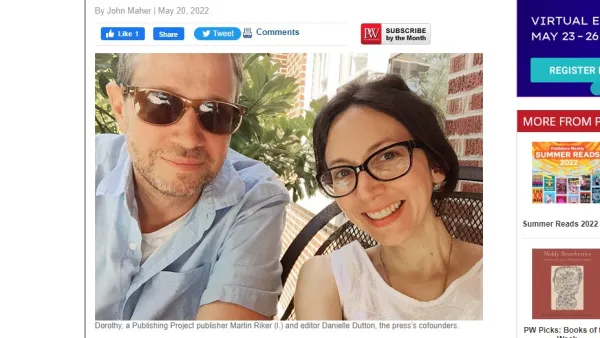
In 2009, Dutton co-founded the acclaimed feminist press Dorothy, a publishing project. The press was named for Dutton’s great aunt Dorothy Traver, a librarian who drove a bookmobile through the backroads of Southern California, delivering books to rural desert communities. Over the years, Dorothy has published books by established innovative writers including Renee Gladman, Cristina Rivera Garza, Amina Cain, Kate Briggs, Nathalie Léger, and Leonora Carrington, and it launched the publishing careers of Nell Zink, Suzanne Scanlon, Azareen Van der Vliet Oloomi, Jen George, and Giada Scodellaro. Dutton does the cover and text design/composition for Dorothy’s books. In 2020, Dutton and co-founder Martin Riker won the Golden Colophon Award for Paradigm Independent Publishing from the Council of Literary Magazines and Presses.

Dutton holds a PhD from the University of Denver, MFA from The School of the Art Institute of Chicago, and BA from the University of California at Santa Cruz. Before joining the faculty at WashU in 2011, she was an instructor in the Jack Kerouac School of Disembodied Poetics at Naropa University and the book designer at Dalkey Archive Press, where she designed for many titles, including: Stories and Essays of Mina LoyAutoportrait and Suicide by Édouard Levé, Djuna Barnes’s RyderAlix’s Journal by Alix Cléo Roubaud, JR and The Recognitions by William Gaddis, and Aliss at the Fire by Jon Fosse.

Recent Courses

Fictions of the Anthropocene (co-taught with Dr. Melanie Micir)

How can writers approach a topic as vast as the Anthropocene, the sixth great age of mass extinctions in which human industry has become a catastrophic environmental force? How can our writing reflect and reimagine what critic Timothy Morton has called “hyperobjects”: concepts or entities of such vast temporal and spatial dimensions (climate change, plutonium, Styrofoam, the Everglades, etc.) that we have a hard time describing them? How can the “slow violence” of climate change or the tangled networks of global capitalism be represented in narrative or poetic forms? Can something written in human language ever give a just voice to non-

human species? Is there a way to write about the ongoing environmental crisis of the Anthropocene that also preserves space for human agency—and perhaps even hope? This class is co-taught by members of the literature and creative writing faculties; our thinking will be hybrid and eclectic, and you will be invited to practice both critical and creative writing throughout the course. We will engage work by writers and artists such as Karen Tei Yamashita, Alexis Pauline Gumbs, Wanuri Kahiu, Cecilia Vicuña, Ursula K. Le Guin, Amitav Ghosh, Donna Haraway, Jeff VanderMeer, etc. The final weeks of the course will be devoted to workshopping your own creative and/or critical writing of the Anthropocene.

Fiction and the Visual

In this class we’ll explore intersections of prose/fiction and the visual, from illustrated manuscripts to stories about visual artists and visual art by writers. We’ll look at excerpts, essays, novels, drawings, collage, and/or paintings by people like Renee Gladman, Mariko Nagai, Sofia Samatar, W.G. Sebald, Francis Bacon, Paula Rego, and John Keene. How might a story act like a photograph or move like an installation? How might forms of visual art--a diptych, the nude--inspire the forms in which we write? Throughout the semester, students will create writing that is in some meaningful way steered or shaped by the visual (be that description, ekphrasis, illustration, a story about standing in front of a painting in a museum trying to decide if you should kiss your date, etc.). Our investigation will be driven less by a thesis than by a generative inquiry into the many ways a purposeful intersection of art forms can open up expressive possibilities.

Intro to Fiction Writing

Fiction 1 serves as an introduction to writing fiction, and as any writer will tell you: to write well you must also read well. Therefore, in addition to attending to your own stories, we’ll read an array of published stories—from Herman Melville's 19C "Bartleby, the Scrivener" to Octavia Butler's 20C "Speech Sounds" to stories by young writers working today—seeking to understand how and why they work. This might sound like a simple task, but I’d like to suggest that it’s actually hard to do. We often read as consumers (thumbs up/thumbs down), but working to get inside something to try to understand it (be it a painting, a novel, or another person’s way of thinking), means opening ourselves to this new thing and the ways in which it might change us. It requires generosity, curiosity, and patience. You’ll likely encounter writing in here that you find frustrating, as well as work you immediately like, but your visceral response, while natural, is not ultimately what we’re after. Our aim is to figure out what makes stories work, what their words, sentences, or paragraphs are doing to us as we read. In short: we will read as writers, looking at the choices different writers have made within the short story form. On a practical level, we’ll talk about elements of fiction—plot, character, setting, etc.—and you’ll experiment with these in your writing.

Selected Work Online

Prairie, Dresses, Art, Other

Prairie, Dresses, Art, Other

Longlisted for the Gordon Burns Prize 2025

“Luminous” (The Guardian) and “brilliantly odd” (The Irish Independent), Danielle Dutton’s writing is as protean as it is beguiling. In the four eponymous sections of Prairie, Dresses, Art, Other, Dutton imagines new models for how literature might work in our fractured times.

“Relentlessly surprising and thoroughly original, this dazzles.” —Publishers Weekly

“Her work is highbrow while remaining mischievously playful, reminiscent of the form-smashing thrills of writers like Lydia Davis and Anne Carson.” —Kirkus, starred review

“Dutton’s greatest powers are her immense skill with language; her exacting attention to image, sound, phrase; her commitment to creating strangeness and newness. Every sentence rewrites a million lesser sentences before it.” —Deb Olin Unferth, The Believer

A Picture Held Us Captive

A Picture Held Us Captive

A Picture Held Us Captive asks what it means for a writer to work "with" someone or something else—to make art in dialogue with an energy not one's own. Dutton explores ekphrastic fiction, looking at a wide range of writers and artists including John Keene and Edgar Degas; Eley Williams and Bridget Riley; Ben Lerner and Anna Ostoya; Amina Cain and Bill Viola; Lydia Davis and Joseph Cornell; as well as her own textual responses to visual artists Richard Kraft and Laura Letinsky. A Picture Held Us Captive—which includes a series of color images at once illustrative and refusing simple illustration—considers the ways in which ekphrasis operates as a diptych. A work of both commentary and self-reflection, Dutton considers a dialectic between art's ability to make strange what has grown familiar and the writer's desire to make recognizable the experience of one artwork in the space of another.

Here Comes Kitty: A Comic Opera

Here Comes Kitty: A Comic Opera

"Here Comes Kitty is a dark circus of the very best kind: bright 'damage' on every page. It pierces the heart with its mixture of love and going. I am honored to speak in support of such an extraordinarily brilliant book." —Bhanu Kapil

"Monumental incongruities—dazzling composition. Richard Kraft and Danielle Dutton have created a riot of images and words. The exuberance is contagious. A delight. A must." —Rosmarie Waldrop

"Here Comes Kitty reaches out in all sorts of ways like a compendium of the postmodern without pretentiousness which—despite combining humor, the erotic, the gothic, the wry, the popular and the sophisticated—tells a tight tale with wild invention and makes you want both to turn the pages and dwell on the images." —Tom Phillips

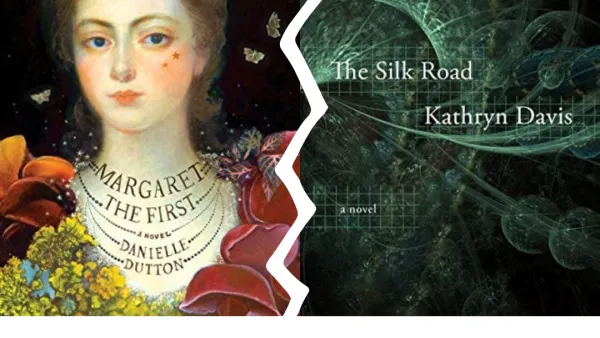
Margaret the First: A Novel

Margaret the First: A Novel

Winner of an Independent Publisher's Book Award Gold Medal for Historical Fiction

Margaret the First dramatizes the life of Margaret Cavendish, the shy, gifted, and wildly unconventional 17th-century Duchess. Written with lucid precision and sharp cuts through narrative time, it is a gorgeous and wholly new approach to imagining the life of a historical woman.

Margaret the First is a brilliantly odd and absorbing historical novel . . . It’s bold, tender, funny and strange; a short book, but not in any way slight, more like a fever dream which brings a real, eccentric, talented woman unnervingly to life.” —Belinda McKeon, The Irish Independent

“Dutton’s remarkable second novel is as vividly imaginative as its subject, the 17th-century English writer and eccentric Margaret Cavendish . . . . Dutton’s boldness, striking prose, and skill at developing an idiosyncratic narrative should introduce her to the wider audience she deserves.” —Publishers Weekly (starred review)

S P R A W L

S P R A W L

Finalist for the Believer Book Award

Inspired by a series of domestic still lifes by photographer Laura Letinsky, Danielle Dutton's absurdly comic and decidedly digressive novel Sprawl chronicles the mercurial inner life of one suburban woman (the dissolving marriage, the crumbs on the countertop, the drunken neighbor careening into the pool, the dead dog on the side of the road), constructing surprising taxonomies that rearrange the banalities, small wonders and accoutrements of contemporary suburban life.

“Dutton’s groundbreaking SPRAWL . . . jams Lisa Robertson’s intelligence and music into a Jane Austen-ish scrutiny of the manner of being in those new landscapes we continue to call ‘suburbs.'”—Matthew Stadler

"SPRAWL in fact does not sprawl at all; rather, it radiates with control and fresh, strange reflection.” —Leigh Newman, Bookforum

"Dutton’s sentences are as taut and controlled as her narrator’s mind, and a hint at what compels both (‘I locate my body by grounding it against the bodies of others’) betrays a fierce and feral searching. SPRAWL makes suburban landscapes thrilling again.” —The Believer Book Award, Editors’ Shortlist

Attempts at a Life

Attempts at a Life

Operating somewhere between fiction and poetry, biography and theory, the stories in ATTEMPTS AT A LIFE do what lively stories do best, creating worlds of possibility, worlds filled with surprises. Like the "experiments in found movement" one character conducts (in "Everybody's Autobiography"), Dutton's stories find movement wherever they turn, each sentence a small explosion of images and anthems and odd juxtapositions. This is writing in which the imagination (both writer's and reader's) is capable of producing almost anything at any moment, from a shiny penny to an alien metropolis, a burning village to a bright green bird. 

"Danielle Dutton's stories remind me of those alluring puzzles where the pool is overflowing and emptying at the same time. Dutton's answer? That the self is a rush of the languages of storytelling and moments of helpless intimacy"--Robert Gluck.

“Indescribably beautiful, also indescribable. . . Read it; remind yourself that comprehending things all the time is really boring.” —Daniel Handler, Entertainment Weekly