Primary tabs

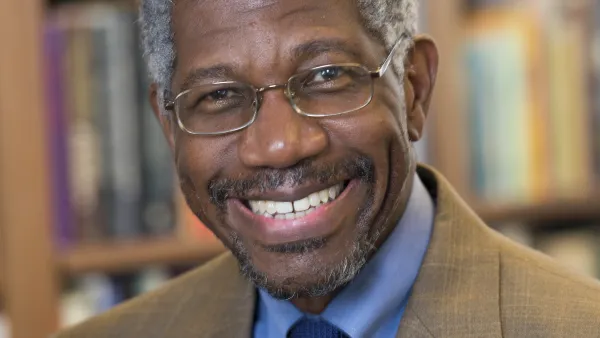
​Gerald Early

https://afas.wustl.edu/xml/faculty_staff/11985/rss.xml
​Gerald Early

​Gerald Early

Professor of African & African American Studies & English
​Merle Kling Professor of Modern Letters
PhD, Cornell University
View All People

Contact info:

Office hours:

  • ​By Appointment

Mailing address:

  • Washington University
    Campus Box 1098-0137-02
    One Brookings Drive
    St. Louis, MO 63130-4899

​Professor Early is an award-winning essayist, author, and editor. He has served as a commentator for NPR and as a consultant for multiple documentaries with Ken Burns. 

Gerald Early is the Merle Kling Professor of Modern Letters in the African and African American Studies Department at Washington University in St. Louis, where he has taught since 1982. 

He was most recently the interim director of the Center for the Study of Race, Ethnicity, and Equity (2022-2023). He was previously the chair of the African and African American Studies Department (2014-2021).  He is also the executive editor of The Common Reader, Washington University’s interdisciplinary journal published under the auspices of the Provost’s office

Early is a noted essayist and American culture critic. His collections of essays include Tuxedo Junction: Essays on American Culture (1989); The Culture of Bruising: Essays on Prizefighting, Literature, and Modern American Culture, which won the 1994 National Book Critics Circle Award for Criticism; This is Where I Came In: Essays on Black America in the 1960s (2003), and, most recently, A Level-Playing Field: African American Athletes and the Republic of Sports (2011). He also authorizes Daughters: On Family and Fatherhood (1994). 

His anthologies include The Cambridge Companion to Boxing (2019); Approaches to Teaching Baraka’s Dutchman (2018, with Matthew Calihman); The Sammy Davis, Jr. Reader (2001); Miles Davis and American Culture (2001); The Muhammad Ali Reader (1998); Ain’t But a Place: An Anthology of African American Writings About St. Louis (1998): and Body Language: Writers on Sport (1998).  Early is an elected American Academy of Arts and Sciences fellow and has been honored with a star on the St. Louis Walk of Fame.
 

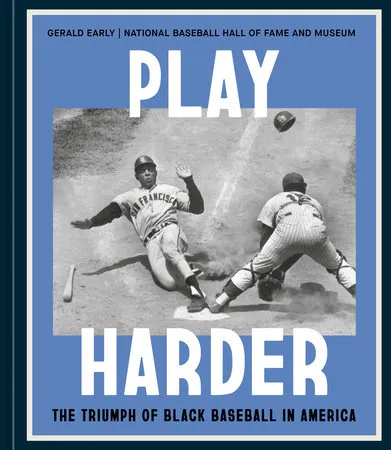
Play Harder - The Triumph of Black Baseball in America

Play Harder - The Triumph of Black Baseball in America

An authoritative exploration of how Black Americans have shaped baseball from its emergence after the Civil War to the Negro Leagues and Jackie Robinson’s breaking of the color barrier, up to today’s game—by award-winning author Gerald Early in collaboration with the National Baseball Hall of Fame.

No sport has been more associated with America’s sense of itself, with its identity, than baseball. No sport has been so inextricably bound with America’s traditions—with its notions of democracy and fair play—than baseball. And no professional sport in America has been as dramatically connected to social change as Major League Baseball when it became racially integrated the moment Jackie Robinson took the field with the Brooklyn Dodgers on April 15, 1947.

Play Harder comes at a time when the history of Black baseball has become especially relevant—following MLB’s recent recognition of the Negro Leagues as major leagues and the effort to incorporate statistics from the Negro Leagues into those for all players. Before Robinson, as Play Harder shows, Black athletes played baseball as far back as the 1800s even before the establishment of the Negro Leagues. But once founded in 1920, the Negro Leagues gave Black Americans an inroad to baseball that would be enduring and profound. The leagues were an instrument of community building during a time when discrimination separated Black people from all white enterprises, including baseball, and they paved the way for racial integration that Black players hoped would come.

Play Harder showcases the Black stars of the game—those from baseball’s early years such as Moses Fleetwood Walker and Rube Foster; Negro Leagues stars like Satchel Paige and Cool Papa Bell; Jackie Robinson and those who crossed the color line after him, like Hank Aaron and Willie Mays, followed by Frank Robinson and Curt Flood; and the stars who ushered in today’s game, such as Reggie Jackson, Dave Winfield, Barry Bonds, and Ken Griffey, Jr. Playing out against the cultural and political events of 150 years, the story bears witness to the richness of this country’s diversity while remaining clear-eyed about the racial injustice endured by Black Americans. In the end, Play Harder celebrates the triumph of some of baseball’s greatest players and their remarkable contributions to the game we know and love today.
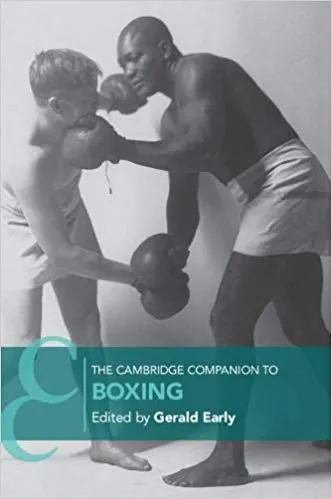
The Cambridge Companion to Boxing

The Cambridge Companion to Boxing

While humans have used their hands to engage in combat since the dawn of man, boxing originated in Ancient Greece as an Olympic event. It is one of the most popular, controversial and misunderstood sports in the world. For its advocates, it is a heroic expression of unfettered individualism. For its critics, it is a depraved and ruthless physical and commercial exploitation of mostly poor young men. This Companion offers engaging and informative essays about the social impact and historical importance of the sport of boxing. It includes a comprehensive chronology of the sport, listing all the important events and personalities. Essays examine topics such as women in boxing, boxing and the rise of television, boxing in Africa, boxing and literature, and boxing and Hollywood films. A unique book for scholars and fans alike, this Companion explores the sport from its inception in Ancient Greece to the death of its most celebrated figure, Muhammad Ali.

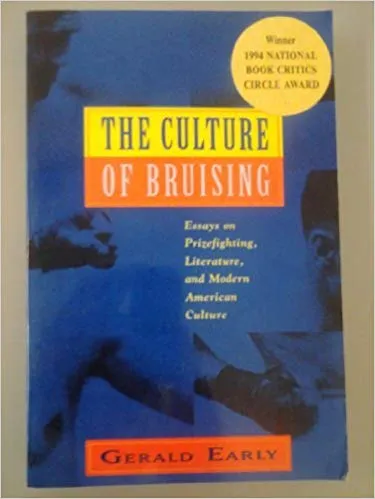
The Culture of Bruising: Essays on Prizefighting, Literature, and Modern American Culture

The Culture of Bruising: Essays on Prizefighting, Literature, and Modern American Culture

"An essay must do more than say something," writes Gerald Early; "It must be something in its own right." The Culture of Bruising is Gerald Early's long-awaited sequel to his award-winning first volume of essays Tuxedo Junction and, in the same spirit, he explores not only a variety of subjects but the form of the essay itself.


Early's cultural ruminations on the sport of prize-fighting form the intellectual core and central metaphor of this book. That is to say, his subject, when writing about boxing, is not just the culture of bruising or the world of the prizefighter but rather the culture as bruising - as a structure of opposition against the individual.


Early's subjects range far and wide - essays in which he shares with us his considerable insights and expertise on such various subjects as multiculturalism and Black History Month, baseball, racist memorabilia, performance magic and race, Malcolm X, early jazz music, and finally, the raising of daughters. In every essay the form strengthens the content and gracefully balances the elements of research and opinion. Early becomes by turns the critic, skeptic, autobiographer, biographer, storyteller, cultural and literary scholar, detached citizen, and bemused parent. He integrates these voices with the skill of an accomplished choirmaster.


The Culture of Bruising is an important and captivating collection of essays that treats issues of justice and racism in the context of sports, music, and other activities Americans value most. Early is a vigilant and highly sensitive observer of our culture, a culture based on the paradoxical combination of self-destruction and violence with personal empowerment and triumph.

The Muhammad Ali Reader

The Muhammad Ali Reader

Muhammad Ali—arguably the finest athlete of the twentieth century and incontestably one of the most famous Americans of his time—is known the world over, not only for his boxing prowess, but for his rebellious courage and resilience against controversy. He has been both underdog and champion, villain and prince, playboy and staunch Muslim, exalted American and punished conscientious objector. He was the ultimate athlete—Heavyweight Champion of the World—and today confronts the physical debilitations of Parkinson's disease.

A one-of-a-kind volume, The Muhammad Ali Reader collects more than thirty of the best writings about this boxing legend in an incredible anthology by the greatest about The Greatest. This is the amazing story of Muhammad Ali—and the world's reaction to him—told by a stellar array of authors, athletes, and social commentators. Floyd Patterson defends Ali's right to criticize America's participation in the Vietnam War; Malcolm X explains how Ali went from "entertainer" to "threat" with his declaration as "a man of race"; Ali himself shares some intimate and definitive thoughts in a Playboy magazine interview; and Gay Talese gives us a front seat on a ride to Cuba, where Ali meets up with Fidel Castro.

Organized by decade, chapters begin with a few opening remarks by Ali himself, and a spectacular sixteen-page photo insert captures The Champ in all his guises. With an introduction by Gerald Early, one of the finest contemporary writers on boxing, The Muhammad Ali Reader confirms Ali's standing as one of the most controversial and charismatic Americans of our time.

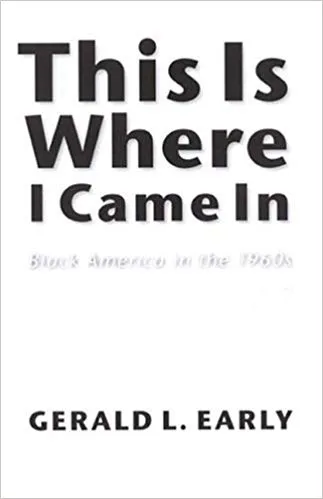
This Is Where I Came In: Black America in the 1960s

This Is Where I Came In: Black America in the 1960s

The fascinating and turbulent black America of the 1960s emerges in these essays, through the lenses of dissent and its contradictions. Gerald L. Early revisits this volatile time in American history, when class, culture, and race ignited conflagrations of bitterness and hatred across the nation.

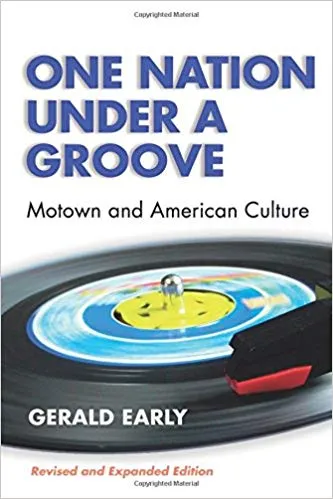
One Nation Under A Groove: Motown and American Culture

One Nation Under A Groove: Motown and American Culture

In its heyday Motown Records was a household word, one of the most famous and successful black-owned businesses in American history, and, arguably, the most significant of all American independent record labels.


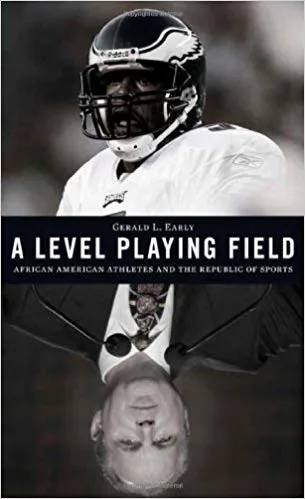
A Level Playing Field: African American Athletes and the Republic of Sports

A Level Playing Field: African American Athletes and the Republic of Sports

As Americans, we believe there ought to be a level playing field for everyone. Even if we don’t expect to finish first, we do expect a fair start. Only in sports have African Americans actually found that elusive level ground. But at the same time, black players offer an ironic perspective on the athlete-hero, for they represent a group historically held to be without social honor.