Hester Blum is the Lynne Cooper Harvey Distinguished Professor of English and Professor of Environmental Studies (Courtesy Affiliation) at Washington University in St. Louis; previously, she taught at Penn State University for twenty-two years.
Hester Blum is the Lynne Cooper Harvey Distinguished Professor of English at Washington University in St. Louis; previously, she taught at Penn State University for twenty-two years. She received her Ph.D. from the University of Pennsylvania in 2002 and her B.A. from Princeton University in 1995.
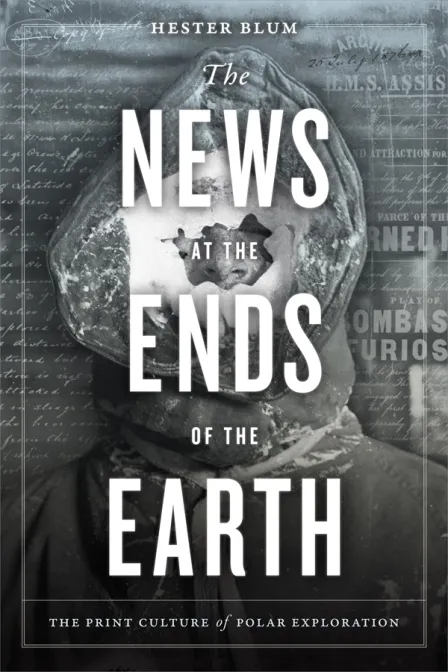
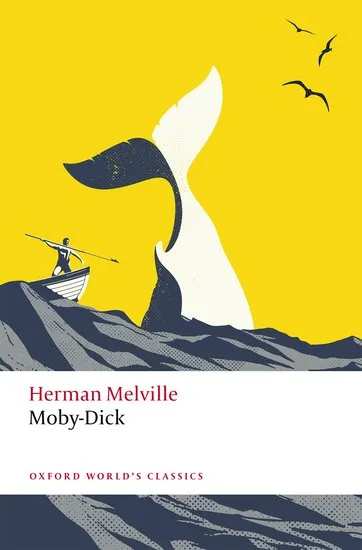
Her scholarship and teaching focus on oceanic and polar studies, nineteenth-century U.S. literature and culture, Herman Melville, and the environmental humanities. Her new edition of Moby-Dick for Oxford World's Classics was published in 2022. Her most recent monograph is The News at the Ends of the Earth: The Print Culture of Polar Exploration (Duke University Press, 2019), which was a CHOICE "Outstanding Academic Title" for 2019 and a finalist for the Ecocritical Book Award from the Association for the Study of Literature and Environment. In it she examines polar expeditionary newspapers and other forms of knowledge that circulate geophysical and climatic extremity, both in the age of polar exploration and in our current moment of climate change and polar resource extraction. She is also the author of The View from the Masthead: Maritime Imagination and Antebellum American Sea Narratives (University of North Carolina Press, 2008), which received the John Gardner Maritime Research award. Her edited books include Horrors of Slavery (Rutgers University Press, 2008), William Ray's 1808 Barbary captivity narrative, the essay collection Turns of Event: Nineteenth-Century American Literary Studies in Motion (University of Pennsylvania Press, 2016), and special issues of Atlantic Studies, Journal of Transnational American Studies, and Regeneration on oceanic, archipelagic, and polar studies. Blum has been a frequent contributor to Avidly, a channel of the Los Angeles Review of Books.
Blum's work has been supported by grants from the John Simon Guggenheim Memorial Foundation, the National Endowment for the Humanities, the Mellon Foundation, the American Philosophical Society, the Newberry Library, the Library Company of Philadelphia, the Huntington Library, the John Carter Brown Library, the Bibliographical Society of America, the National Humanities Center, and the American Antiquarian Society, to which she was elected to membership in 2013.
Blum is founder of C19: The Society of Nineteenth-Century Americanists, and over her career has served as president or director of C19, the Herman Melville Society, and (at Penn State) the Institute for the Arts and Humanities, Center for American Literary Studies, Polar Center, and English Grad Futures. She joined the 38th Voyage of the Charles W. Morgan, the world's last surviving wooden whaleship; participated in the NSF-sponsored Northwest Passage Project, an Arctic expedition tracking climate change, as well as the attendant documentary Frozen Obsession; lectured on Antarctic literary history on a cruise to Antarctica; visited the Arctic archipelago Svalbard with The Artic Circle expeditionary residency; and has made research trips to Nunavut, the Northwest Territories, Greenland, and Sápmi. In December, 2021 she reached the semifinals of the Jeopardy! Professors Tournament.
She is at work on two new book projects: Polar Erratics: In and Out of Place in the Arctic and Antarctica, about the temporalities of polar humanities scholarship; and a monograph on Larry McMurtry’s novel Lonesome Dove.