
“New Girls” in Motion: Trends in Progressive Era Popular Fiction (1900-1920)
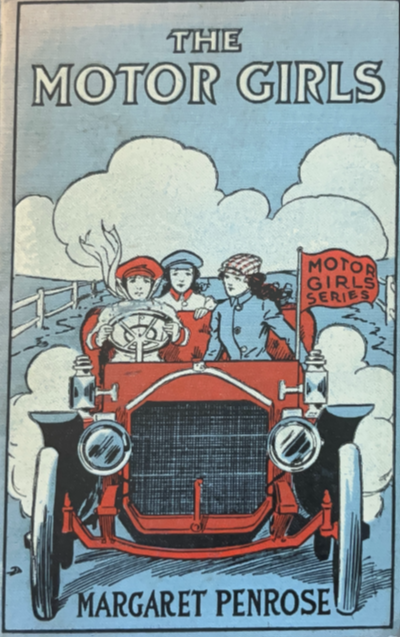
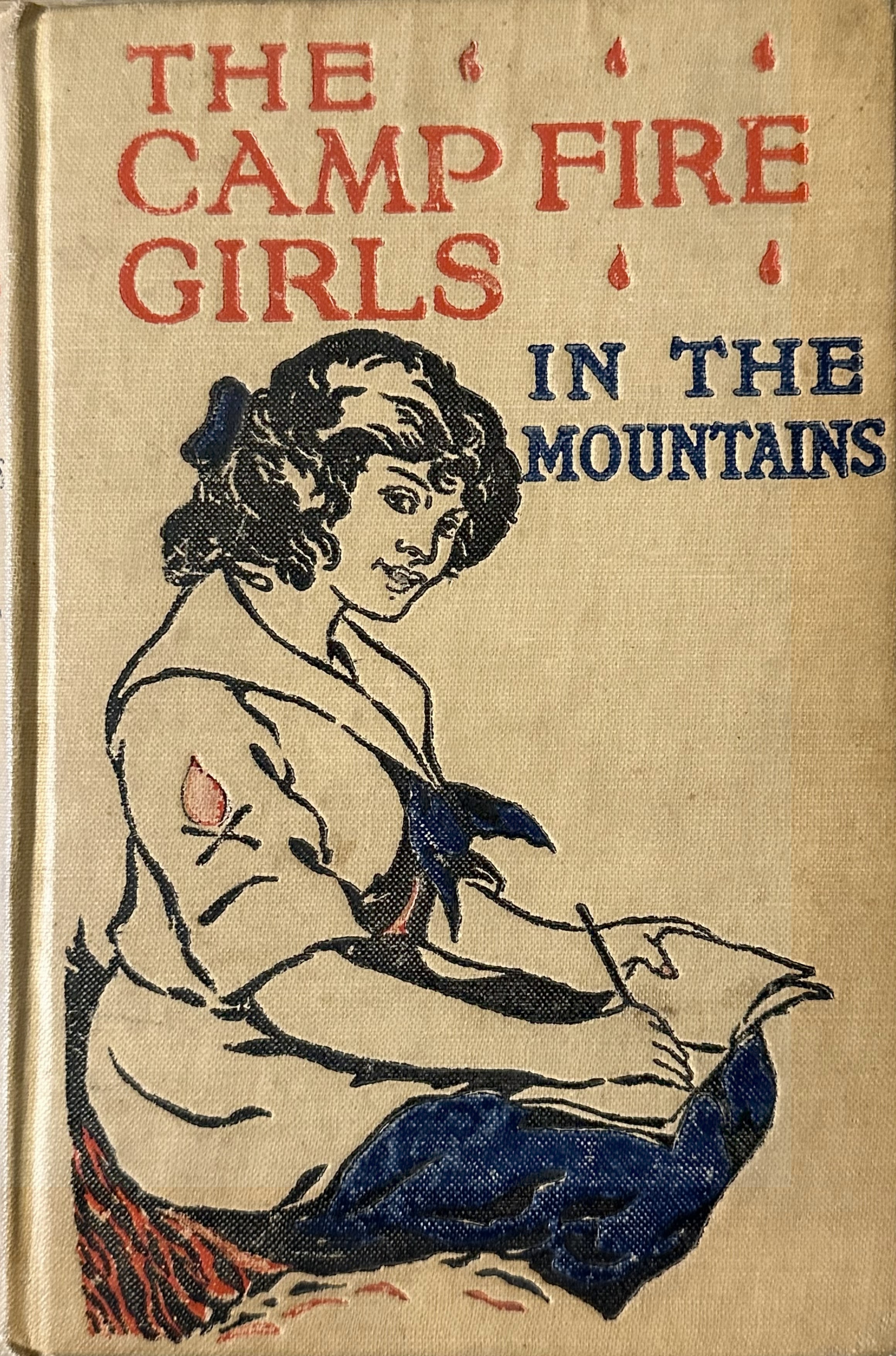
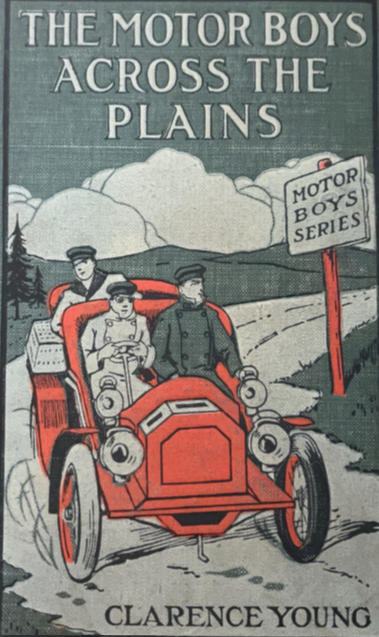
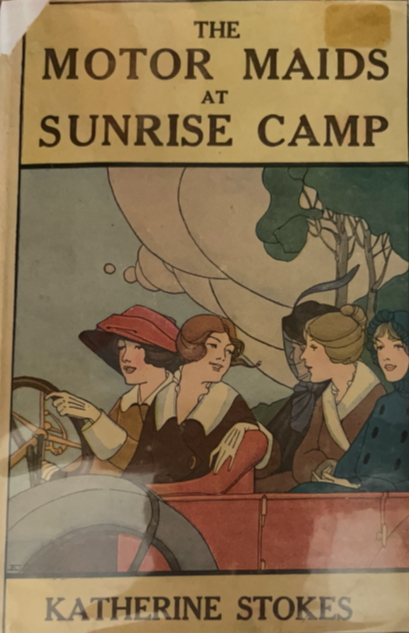
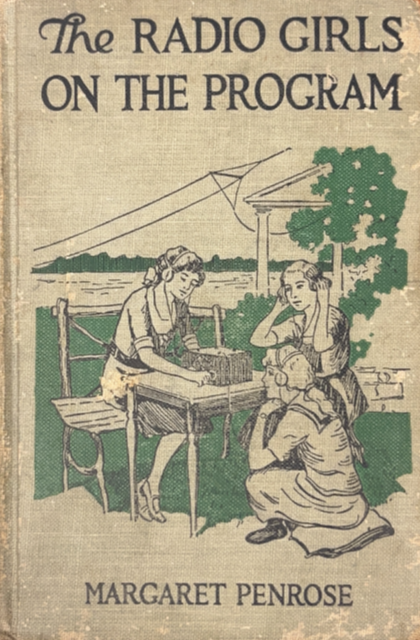
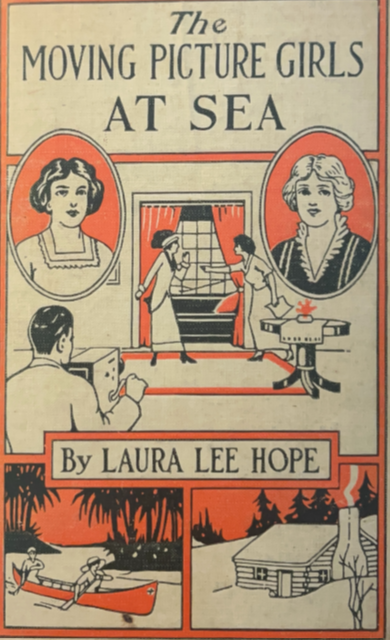
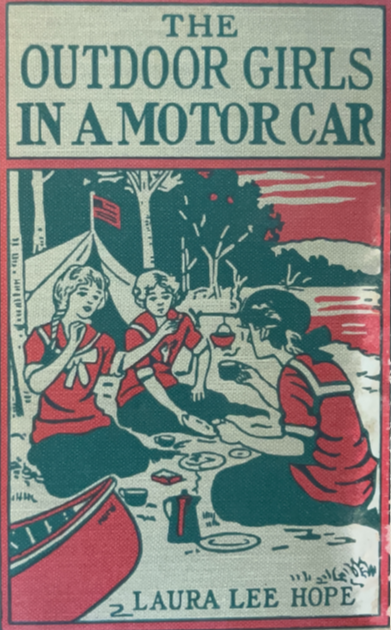
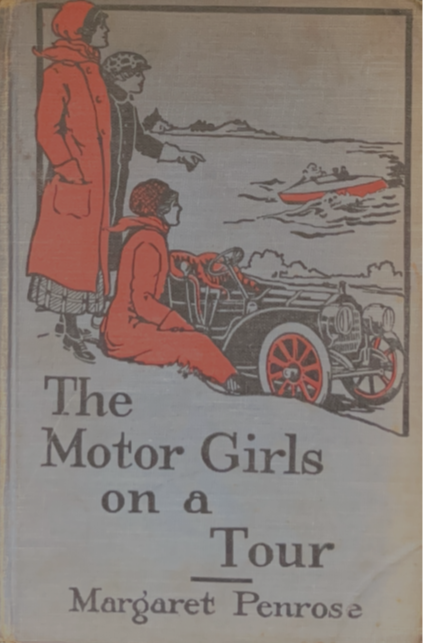
The books on this shelf are all over 100 years old! Yet if there is one thing these books for girls insist on, it is their newness. They describe themselves as “up-to-the-minute,” “modern,” “thrilling,” and intended for the “girl of today.” These strikingly illustrated volumes demonstrate their commitment to modernity by visibly breaking the conventions of 19th-century children’s literature, which offered stories of domesticity and family life to girls, while leaving the “adventure” genre exclusively to boys (Segel). With the advent of the new century, all of that changed. Suddenly, the parlor was empty: girls in fiction were out camping, hiking, playing sports, tinkering with radio equipment, participating in “moving pictures,” and experiencing the thrill of the open road in their shiny new automobiles. The titles themselves – The Motor Girls, The Motor Maids, The Outdoor Girls – proudly advertise this departure from the domestic sphere.
The Progressive Era brought reforms in the workplace and in schools, making high school available to more young people than ever before; the “New Woman” of the era, unlike her Victorian counterpart, increasingly participated in the public sphere, even marching for the right to vote. Publishers, eager to sell their books widely, embraced these changes at a surprisingly rapid pace. Edward Stratemeyer, the innovative head of the Stratemeyer Syndicate, produced books for young Americans that celebrated emerging technologies; notably, his series for girls kept pace with his series for boys in their topics and their commitment to plucky, self-reliant protagonists and their energetic chums. (One descendant of this tradition is Nancy Drew – hers was the final series launched by Stratemeyer himself, in 1930.)
The series books consistently demonstrated a progressive stance on class as well as gender. Working class characters - garage mechanics, shop girls, and scholarship students - featured in the central friend groups in the novels, alongside the more privileged characters who could afford the era’s newest luxuries. This progressivism did not, however, extend to race or ethnicity: sadly, characters drawn from minority groups generally appeared only in service roles or as stereotyped “local color.” Real change in this respect only began to appear after the landmark publication of W.E.B. Du Bois’s Brownies’ Book magazine in 1920.
Scholars have observed that such series books both reflected changing currents in the real world and amplified them, offering girl readers a wider horizon and broader scope for their ambitions. As Nancy Tillman Romalov remarks, “By giving heroines the technological expertise to master automobiles…and imbuing them with a relish for action and strenuous physical activity, the authors marked their characters as new women ready to inhabit a modern era.” Romalov’s nuanced analysis acknowledges the tensions and moments of ambivalence that crop up at certain moments in these narratives, but in the end, the girls aways triumph: mechanical failures, flat tires, thunderstorms, wild animals, and even the occasional disapproving adult are no match for the protagonists’ determination. Girls were invited to see a central and exciting role for themselves in the new century.
Sales boomed. Girls consumed, collected, and circulated these works, checking off their acquisitions on the convenient lists appended in the final pages and responding with an enthusiasm that we associate with fan culture today. One reader from 1914, summing up the attachment many readers felt for the books’ leading characters, let her affection spill onto the pages of the book itself in the form of a handwritten poem of praise. Beginning with “The Motor Girls are dear to me, I love them one and all, ” she pays tribute to each character in turn, before concluding: “Great times they have to-gether/ Clean, wholesome jolly sport/ And more dear to me than friends/ Are the Motor Girls”!
Books on Shelf:
Penrose, The Motor Girls and The Motor Girls on a Tour, 1910; Young, The Motor Boys Across the Plains, 1910; Hope, The Outdoor Girls in a Motor Car, 1913; Stoke, The Motor Maids at Sunrise Camp, 1914; Hope, The Moving Picture Girls at Sea, 1915; Penrose, The Radio Girls on the Program, 1922. Additional volume: Macy, Motor Girls: How Women Took the Wheel, National Geographic Series for Young Readers, 2017.
Scholarly Sources:
Elizabeth Segel, “’As the Twig Is Bent’: Gender and Childhood Reading” in Through the Eyes of a Child: An Introduction to Children’s Literature, Prentice-Hall, 2007; Nancy Tillman Romalov: “Mobile Heroines: Early Twentieth-Century Girls’ Automobile Series,” Journal of Popular Culture, Spring 1995.
Source of reader poem: The Motor Girls on Crystal Bay, 1914, curator’s copy.